
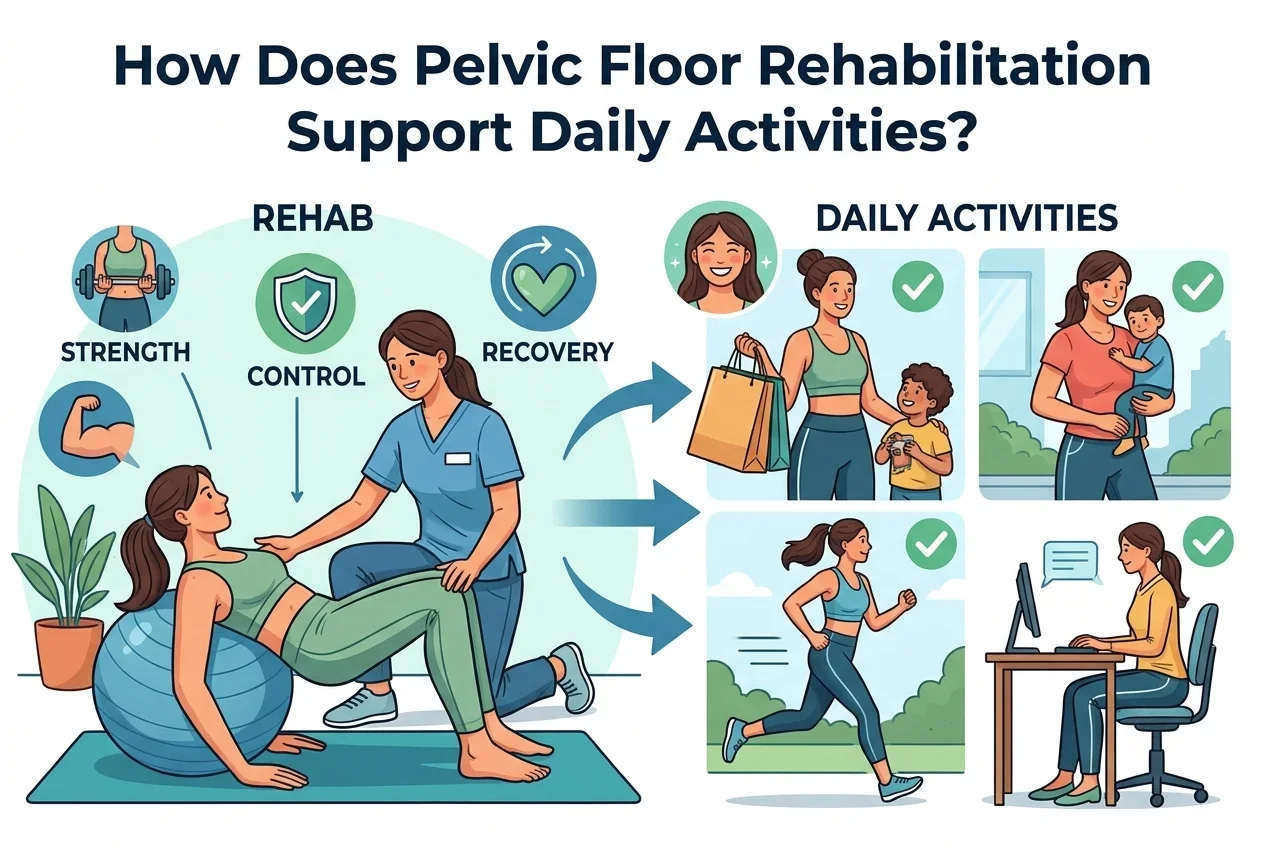
Pelvic floor problems can affect much more than bladder or bowel function. They may influence how comfortably you walk, exercise, sit, lift, work or participate in social activities. Pelvic Floor Physio in Edmonton can help address pelvic floor weakness, excessive muscle tension, poor coordination and related discomfort through an individualized physiotherapy plan.
The pelvic floor is a group of muscles and connective tissues that support the pelvic organs and contribute to bladder and bowel control, core stability, breathing and sexual function. When these muscles don’t work effectively, everyday movements can become uncomfortable or difficult.
The pelvic floor works with the core muscles to support the body, manage pressure, contract for support, and relax during urination and bowel movements.
This means pelvic floor function can be involved in activities such as:
The goal of Pelvic Floor Rehabilitation is not always to make the muscles stronger. Depending on the cause of your symptoms, treatment may focus on strength, relaxation, flexibility, timing, endurance or coordination.
How does my pelvic floor affect everyday movements?
Your pelvic floor supports bladder and bowel control, core stability and movement. We assess how these muscles work with surrounding muscles to improve coordination during everyday activities.
Urinary leakage or sudden urgency can cause people to plan their activities around bathroom access. Coughing, sneezing, running, or lifting may trigger leakage when the pelvic floor cannot provide sufficient support.
A physiotherapist can assess muscle strength and coordination and teach appropriate contractions, relaxation and functional strategies. Training may also focus on activating the muscles at the right time during movement.
Improved muscle control may make everyday activities feel more manageable and less restrictive.
The pelvic floor also contributes to bowel control. Difficulty relaxing these muscles at the appropriate time can contribute to straining, incomplete emptying or other bowel concerns.
Pelvic Floor Rehabilitation may include breathing exercises, muscle relaxation, coordination training, positioning advice and education about bowel habits. Treatment depends on the individual’s symptoms rather than assuming strengthening is always necessary.
Pelvic pain can affect sitting at work, walking, exercising and completing household activities. Some people have weak pelvic floor muscles, while others may have muscles that remain overly tense.
For people seeking physiotherapy for chronic pelvic pain, an assessment can help identify factors involving the pelvic floor, hips, lower back, breathing patterns and movement habits.
Treatment may include manual therapy, soft-tissue techniques, mobility exercises, breathing and relaxation training, therapeutic exercise, neuromuscular re-education and gradual functional activity.
The pelvic floor is part of the body’s core and pressure-management system. It works with the diaphragm and abdominal and spinal muscles during activities requiring stability.
Pelvic Floor Rehabilitation can include deep abdominal activation, breathing coordination, postural training and functional strengthening. These exercises may help improve control during bending, lifting, standing and walking.
Better coordination can also be useful when pelvic symptoms occur alongside hip or lower-back discomfort.
Pregnancy places changing demands on the pelvic floor, abdominal muscles, hips and spine. Following childbirth, some people experience leakage, pelvic pressure, discomfort, weakness or difficulty returning to exercise.
Pelvic health physiotherapy can address strength, mobility and muscle coordination during pregnancy or postpartum recovery. Treatment may include breathing strategies, pelvic floor exercises, relaxation techniques, posture education, mobility work and progressive functional exercises.
The goal is to help you return to appropriate daily activities based on your individual needs.
Can pelvic floor rehabilitation help me manage daily activities more comfortably?
Yes. We can address muscle weakness, tension and coordination issues through personalized exercises and physiotherapy techniques to support movement, bladder control and everyday functional activities.
A physiotherapy assessment determines which techniques are appropriate. Depending on your symptoms and goals, Pelvic Floor Therapy may include:
Exercises can improve pelvic floor strength, endurance and control when weakness contributes to symptoms.
If the muscles are overactive or tense, treatment may focus on reducing unnecessary tension instead of adding more strengthening exercises.
Breathing exercises can help coordinate the diaphragm and pelvic floor while supporting pressure management and muscle relaxation.
Gentle hands-on treatment may address muscle tension, soft-tissue restrictions, and mobility limitations when clinically appropriate.
This approach focuses on improving awareness, timing and coordination between the pelvic floor and surrounding muscles during movement.
Exercises may target the hips, abdomen, back and lower limbs to improve overall strength, mobility and movement control.
The physiotherapist may assess how you sit, stand, bend, and lift, then introduce practical strategies as part of Pelvic Floor Physio in Edmonton that you can apply to everyday activities.
Not everyone requires the same techniques. An individualized approach is important because pelvic floor symptoms can have different causes and needs.
Can physiotherapy help with urinary leakage when I cough or exercise?
Yes. We assess your pelvic floor strength and coordination, then provide targeted exercises and strategies to improve muscle control during coughing, lifting, exercise and other activities.
Consider an assessment if pelvic symptoms such as leakage, urgency, pelvic pressure, pain, constipation, or postpartum concerns affect your daily routine.
Professional guidance can help if pelvic floor exercises have not improved your symptoms. More strengthening is not always the answer; you may need to improve relaxation, mobility or coordination.
At West Henday Physical Therapy, Pelvic Floor Rehabilitation is tailored to your symptoms and functional goals. A physiotherapist can assess your muscle and movement function and develop an appropriate treatment plan.
For those looking for a pelvic floor therapy clinic Edmonton residents can access, an assessment can be a useful first step toward understanding your pelvic health concerns.
Can pelvic floor treatment improve my core stability during daily movements?
Yes. We may combine pelvic floor exercises with breathing, abdominal activation, postural training and functional exercises to improve coordination and support controlled movement during everyday activities.
Pelvic health can influence ordinary activities such as walking, lifting, exercising, working and using the bathroom. Pelvic Floor Rehabilitation focuses on improving the strength, relaxation, mobility and coordination needed for these activities.
If pelvic symptoms are affecting your routine, Pelvic Floor Physio in Edmonton can help you understand your symptoms and work toward practical functional goals. Contact West Henday Physical Therapy to discuss whether Pelvic Health Physiotherapy may be appropriate for your needs.

Joyce Joseph is a Registered Physiotherapist with a BPT and experience in women’s health, acupuncture, and vestibular rehabilitation. She takes an individualized approach to physiotherapy, focusing on understanding each patient’s concerns and supporting practical goals through personalized assessment and treatment.
Yes. We can assess pelvic floor strength, muscle coordination and movement patterns to identify contributing factors. Your treatment plan may include targeted exercises, breathing strategies and functional training based on your assessment.
Yes. Pelvic floor concerns can involve leakage, urgency, bowel difficulties, weakness or coordination problems without causing pain. We assess your symptoms and muscle function to determine an appropriate physiotherapy approach.
No. Pelvic floor concerns can affect women at different stages of life, including during pregnancy, after childbirth and later adulthood. Physiotherapy can address various pelvic health concerns based on individual needs.
We can assess your pelvic floor function, strength, coordination and movement patterns before developing a progressive exercise plan. Treatment may help you gradually return to running while addressing relevant pelvic health concerns.
We assess how your pelvic floor responds to increased physical demands and teach appropriate activation and coordination strategies. Your program may include strengthening, breathing and progressive functional exercises tailored to your activities.
Yes. We can assess pelvic, hip and lower-back movement and muscle tension. Treatment may include mobility exercises, relaxation techniques, manual therapy and movement strategies to improve comfort during prolonged sitting.
Yes. When appropriate, we provide personalized exercises and strategies that can be incorporated into your routine. Your home program may focus on strength, relaxation, mobility, breathing or coordination based on your assessment.
Yes. Pelvic floor function is connected with surrounding muscles and movement patterns. We may use manual therapy, mobility exercises, relaxation techniques and targeted strengthening to address relevant areas contributing to your symptoms.
Yes. We can assess how your pelvic floor responds to lifting and increased abdominal pressure. Treatment may include breathing, muscle coordination and progressive strengthening to support a gradual return to strength training.
Treatment duration varies according to your symptoms, goals and response to therapy. We assess your progress throughout care and adjust exercises and treatment techniques as your pelvic health and functional abilities improve.

© 2026 West Henday Physical Therapy – Developed by Linkbuffer Studios & Research Labs All rights reserved.